Successfully control the building schedule and costs.
Firstly, get your Contract Strategy right.
Secondly, develop an achievable Schedule and realistic Budget.
Thirdly, manage the critical path to being wind and weathertight.
1| The Challenges For Small Developers & Self-Builders
Small developers and self-builders face identical construction management problems despite having different end goals. Budget overruns will reduce the developers profit or reduce the quality of the self-builders dream home. In both cases, projects are typically funded through loans, making cost and schedule control paramount.
2| Contract Strategy Options for Effective Construction Management
Once planning consent is secured, choosing the right contract strategy is the next critical step. This decision directly impacts cost, risk, and the level of input required from the client. A developer may use any of the 4 routes, but a Self-builder will only ever consider the third and fourth options.
|
Strategy Option |
Description |
Pros/Cons |
|---|---|---|
|
Main Contractor (Design & Build) |
Appointing a main contractor for detailed design and construction management. |
Most expensive. Minimises client input, but risk of contractor cutting corners for profit. |
|
Architect & Main Contractor (Traditional) |
Architect handles detailed design, main contractor builds with Architectural supervision. |
Costly. No means to control of Schedule or Budget. |
|
Self-Managed |
Architect handles detailed design, Client manages construction. |
Highest risk (quality and budget), especially for inexperienced clients. |
|
Professional Construction Manager |
Professional manages Detailed Design and Construction. |
Optimal risk reduction, superior quality, and budget control. |
3| Schedule & Budget: The Core of Construction Management
Develop a Realistic Schedule
After obtaining planning permission, the most important element of a successful project is the rigorous control of the Schedule and Budget. Many inexperienced builders mistakenly prepare the Budget first and then the Schedule. This is not the right approach, simply because, after the materials to be used have been identified, the primary driver of cost is the time spent on the project by everyone involved in it.
But the preparation of an achievable schedule does require a great deal of experience.
Prepare the Budget
Preliminary Estimates
The approximate estimates prepared during the project planning phase based on cost per square meter are useful for initial planning but are completely inadequate for construction management. The Construction Manager (CM) will be able to prepare more accurate estimates based on material take-offs from the planning drawings that can be used as the basis of his engagement, but even these will not be accurate enough for tight cost control.
Project Budget
The Project Budget must be established with certainty and include a contingency sum (e.g. 10%). The Budget will be identified by the CM after the Schedule has been developed and prices obtained from contractors and suppliers based on the drawings prepared for Building Regulation approval.
The Critical Path to the Shell (Wind & Weathertight)
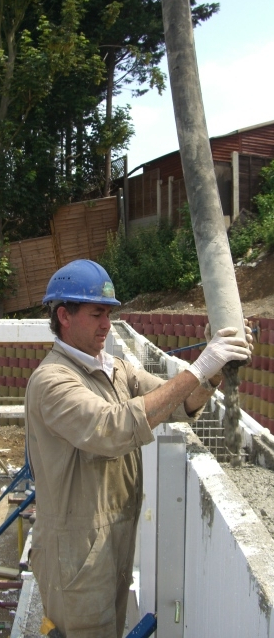
Achieving the Shell stage in a residential building requires precise sequencing of interdependent stages (foundations, walls, floors, roof, and external doors/windows) managed via critical path planning to minimise delays. An experienced construction manager identifies this, coordinates scaffolding for elevated work on walls, roof, and windows, and mitigates risks like weather or supply issues that could shift the path and extend timelines. By allowing sufficient “Float” in the Schedule.
Once these elements are complete, the structure is fully enclosed and protected, eliminating exposure to the elements. This allows the subsequent tasks (kitchens, bathrooms, internal finishes, and landscaping) to be carried out in a stable environment, free from time pressures of the critical path or budget overruns from delays.
Key Benefits of Experienced Management
Protect your investment from the elements. Speak to our experts to ensure your shell is wind and weathertight—built right, on budget, the first time.
4| The Professional Construction Manager’s Role
Once a project starts on site, every single day generates cost until the Shell stage is reached. A professional Construction Manager (CM) is vital for staying within the Budget and Schedule.
5| Structure & Shell Construction Management Services
In the building industry, the Project Manager oversees the entire project, while the Construction Manager focuses specifically on the budget and schedule aspects of the physical building work.
ICF Designs ‘Structure and Shell Service’ has been set up to get a new residence up to the Shell stage, relieving the client of pressure during the most critical, cost-sensitive stage of the project.
The service includes:
6| Conclusion: Securing Your Project With Expert Construction Management
The Shell stage is the most financially vulnerable period for any self-build or development project due to the interdependence of critical tasks. By securing professional construction management through a service like “Structure & Shell” you overcome the problems encountered in reaching the Shell milestone. Once this stage is complete, the project can be finished at a more relaxed pace, independent of weather and without the worry of costs escalating due to delays to the Critical Path of the Schedule. This is how you ensure successful and cost-effective construction management from start to finish.
Ready To Control Your Project Costs?
Secure your budget and schedule up to the Shell stage! Contact the ICF Designs team today to discuss your project and learn about our Structure and Shell Service.