Of fundamental importance and highly interdependent .
Everything depends on them, but they must not be over-engineered.
Structurally efficient systems that are not labour intensive.
Use readily available local source materials and trusses.
The Crucial Role of the 5 Shell Elements
The installation of the five wind and weathertight elements will always involve a combination of time periods that will form the Critical Path of the project schedule. The Critical Path in a project schedule is the longest sequence of dependent tasks that determines the shortest possible duration to complete the entire project, where any delay in these tasks directly delays the overall finish date.
Every day lost in this phase translates directly into increased site costs, wage bills, and potential budget overruns. Skill and experience are vital in the design and management of these five elements to ensure a successful, cost-effective house construction project. Professional construction management is essential to navigate these complexities, offering the necessary expertise and oversight to keep the project on track.
1| Foundations: Control of the Design Process is Essential
The foundations are the bedrock of any project, and unforeseen costs here can be disastrous. Do not assume that your structural engineer will automatically provide the most economical solution because it is not their job. They will follow the directions of the Client and other technical advisors and it is up to you or your Construction Manager (CM) as to what type of foundation should be installed.
Sub-soil & Site Surveys
The only way to avoid catastrophic unforeseen costs is to carry out appropriate sub-soil surveys. The complexity of these surveys varies: some sites may only require simple test pits and lab testing, while others demand comprehensive boreholes and sleeve testing.
Strip Footings: The Standard for House Construction
For centuries, UK dwellings have relied on simple strip foundations. Today, the minimum required depth is 1m, which is generally adequate.
Addressing Challenging Ground Conditions
While strip footings are the standard for most house construction, severe conditions require alternative solutions like rafts or, rarely, piling.
Rafts & Piling Alternatives
When strip footings have been ruled out, a raft foundations may be required, or, as a last resort, piling.
Protect your investment from the elements. Speak to our experts to ensure your shell is wind and weathertight—built right, on budget, the first time.
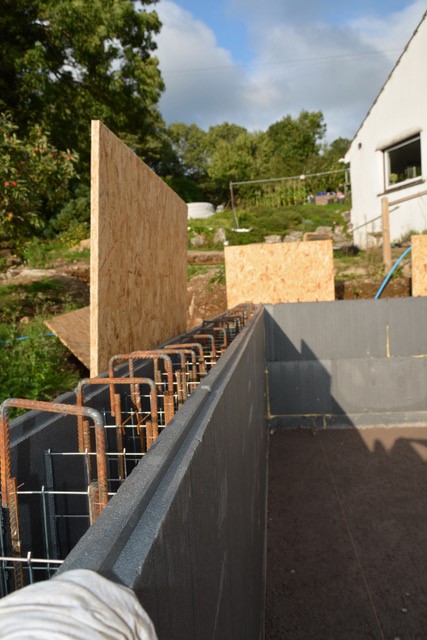
2| Walls: The Choice of Wall type is the Most Important Decision of all
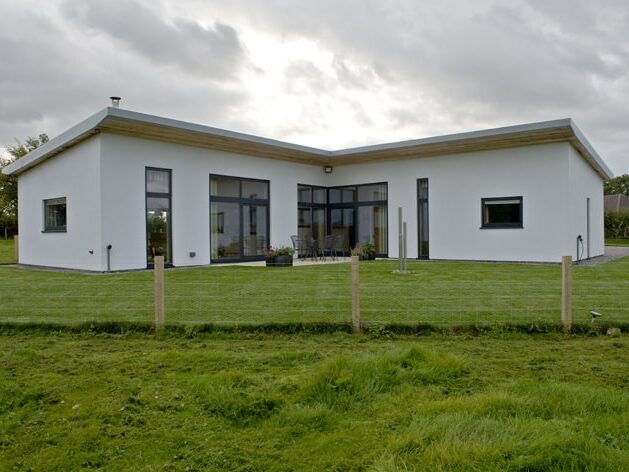
The wall system is of primary importance in ensuring the structural integrity and long-term performance of your house construction in terms of insulation, fire safety, and soundproofing.
Cavity Wall, Timber Frame or ICF
While traditional cavity walls and timber frames remain common, ICF is an advanced building system that is rapidly replacing them as a primary method for residential units.
ICF homes offer superior performance because they provide:
3| Floors: They Govern the Thermal and Acoustic performance of the Building and brace the walls against Wind Loading.
Floors provide structural support and are key to achieving modern energy efficiency standards.
Ground Floor Requirements
New building standards require very low floor U-values (0.13 W/m2K). Ground-bearing slabs are often easier to integrate with ICF walls than suspended floors (beam & block or timber), as they avoid the need for complex cutting around the precast beams of a beam and block floor.
|
Floor Type |
Advantages |
Disadvantages |
|---|---|---|
|
Ground-Bearing Slab |
1) Less insulation required because no air circulation beneath the floor |
1) May need existing soft soil to be removed and replaced with numerous layers of granular soil |
|
Suspended Timber |
|
1) The void increases heat losses |
|
Beam and Insulation |
1) Quick and easy to install |
1) The void increases heat losses |
Upper Floors
Upper floors must balance span capability, acoustics, and ease of installation.
|
Aspect |
Beam and Block (Concrete) |
Timber Joists (Traditional Softwood) |
Engineered Timber (I-Joists or Metal Web) |
|---|---|---|---|
|
Construction |
I-beams (OSB web) or open metal webs (Posijoists) |
||
|
Span Capability |
|||
|
Installation Speed |
|||
|
Durability/Longevity |
80+ years |
||
|
Sound Insulation |
Needs a high level of quality control during installation |
||
|
Fire Resistance |
|||
|
Cost (incl. labour) |
£70-80 /m² |
£50 – 60 /m² |
|
|
Suitability |
ICF walls are highly versatile and can support any of the suspended floor types by simply installing the appropriate fixings into the concrete core before it is poured.
4 | Roofs: Type and Cost is Governed by the Planning Consent.
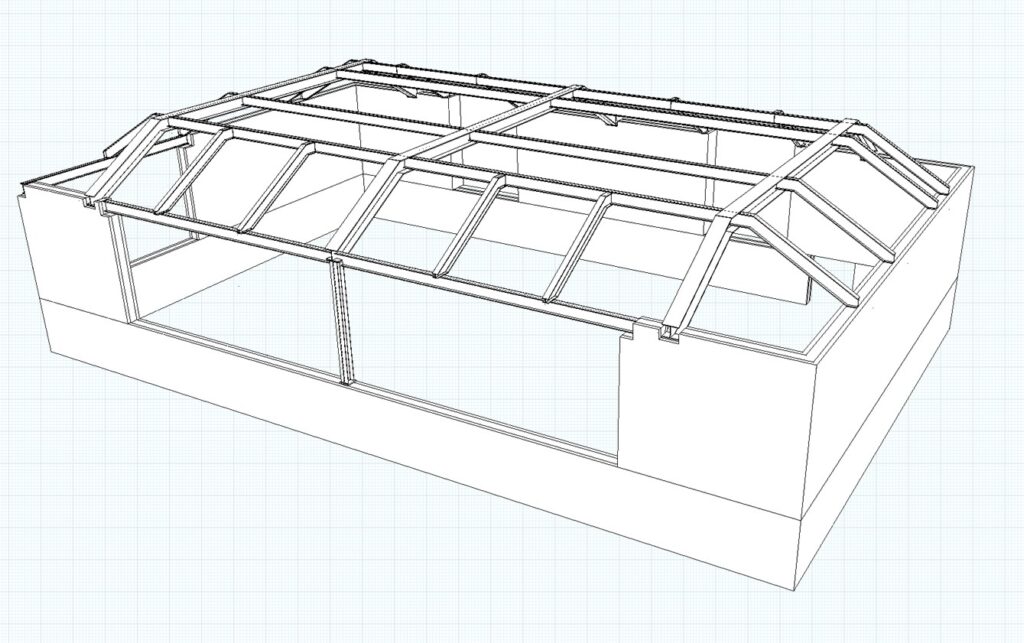
The primary cost of the roof is controlled by the finish specified on the planning consent drawings. Most modern roofs will incoporate trusses designed and supplied by a specialist.
Truss Roofs vs. Cut Roofs
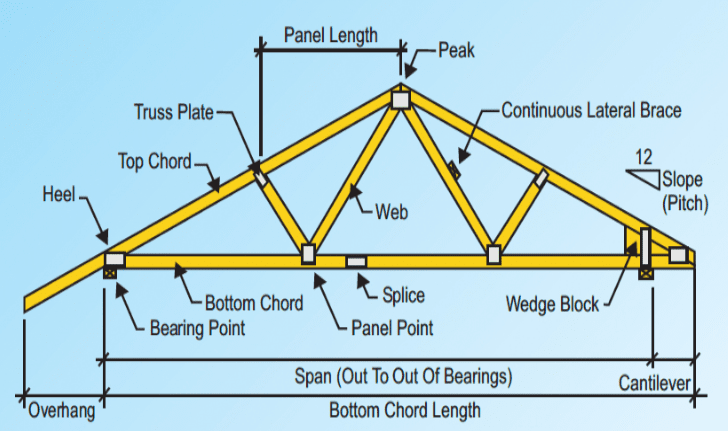
Roof Trusses: Factory-prefabricated for fast installation, limiting site assembly. Delivery constraints typically limit single-piece spans to 12-15m in the UK. Trusses limit attic space and design flexibility.
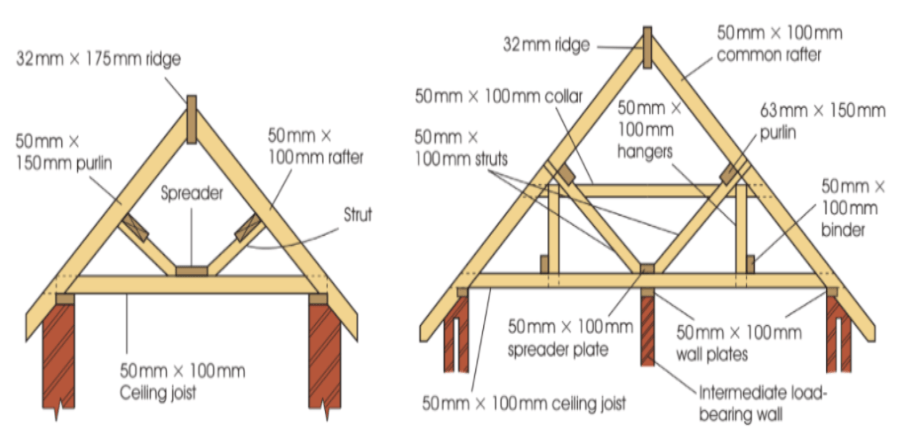
Cut Roofs: Traditional pitched roof construction where components (rafters, purlins, etc.) are cut and assembled on-site by skilled carpenters. Cut roofs offer superior customization for complex shapes and enable attic conversions, but require more time and skilled labour.
Roof Coverings
The planned pitch of the roof directly dictates the type of tile or slate that can be used. This choice must be aligned with the aesthetic requirements imposed by the planning consent and must be factored into the overall budget.
5 | Exterior Doors and Windows: Sealing the Critical Path
While the planning consent may not impose a detailed specification for windows and doors, the final choice significantly affects the project budget and is critical for the schedule.
Ready To Control Your Project Costs?
Talk to the ICF Designs team today to discuss your project requirements and learn how our Structure and Shell service can secure your budget and schedule up to the critical Wind and Weathertight stage.